
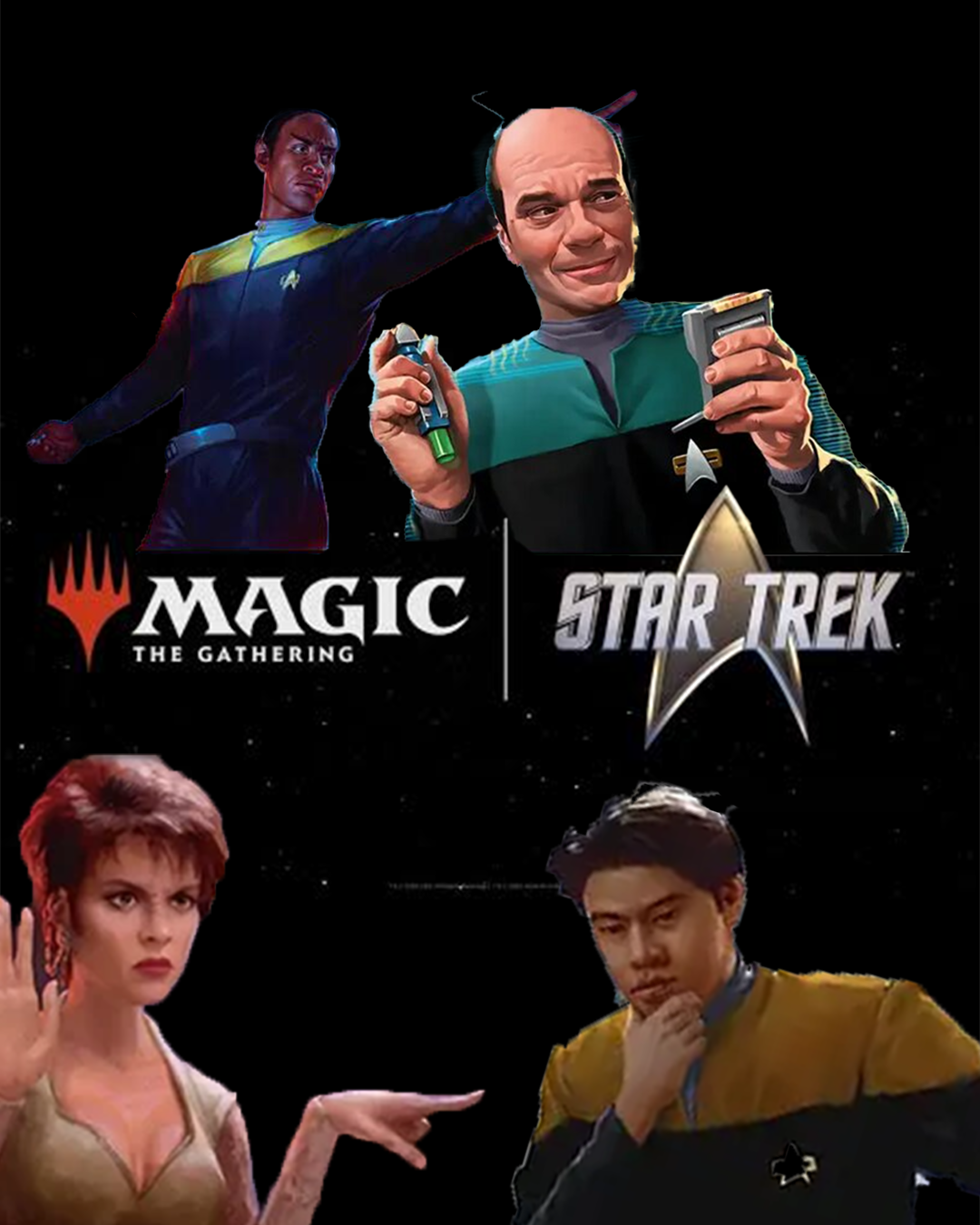
Seeing Robert Picardo, Connor Trinneer, Chase Masterson, Dominic Seating, Tim Russ, and Garrett Wang immortalized on Magic: The Gathering cards would have been enough to make the Star Trek panel at the U.S.S. Gathering launch celebration memorable. Then the conversation became something much more important. The actors explained why placing 60 years of Star Trek inside a game built around gathering in person could genuinely matter at a time when loneliness and disconnection keep pulling people apart. For fans who credit the franchise with carrying them through the darkest moments of their lives, Magic: The Gathering | Star Trek offers more than another collectible. It gives those stories a new way to reach people who may need them next.
Star Trek and Magic Were Always About Community
The crossover makes immediate sense as a collision of two massive nerd institutions. Both have decades of history, intensely devoted fans, encyclopedic lore, and enough arguments over captains or commanders to ruin an otherwise peaceful dinner.
Chase Masterson identified the more meaningful connection during the panel.
“Star Trek has always been about community, and Magic: The Gathering has always been about community.”
That shared foundation matters more than matching a character with the correct colors or debating whether a famous starship received enough power and toughness. Both franchises create reasons for people to find one another.
Star Trek fans gather at conventions, organize fan groups, trade stories, and form relationships around a future they want to believe humanity can still reach. Magic players sit across from friends and strangers, shuffle their decks, reveal their personalities through cardboard, and create a new story every time they play.
Masterson celebrated the crossover for combining those experiences.
“To see these two franchises come together in this way, to not only celebrate the power of both of these properties, but also bring people together in a way that will create fun and memories and relationships and all the joy that both of these amazing gifts have to offer, it’s phenomenal.”
The cards may bring the franchises together mechanically, but people complete the crossover. A collector can admire the artwork alone. A player has to sit down, meet someone, and begin a conversation.
These Stories Have Carried Fans Through Their Darkest Moments

The panel became far more serious when Masterson addressed what that new point of entry could mean. She noted that people need real, in-person community at a moment when many feel more isolated than ever.
“We’re living in a time when community and in-person community is so important and is at risk, frankly, because levels of loneliness and disconnection are at an all-time high.”
Magic cannot solve a crisis of loneliness by itself. It can, however, give people a structured reason to leave the house, share a table, talk to somebody new, and return the following week. Sometimes the hardest part of building a relationship is finding an excuse to begin one.
Bringing Star Trek into that environment adds stories built around cooperation, morality, sacrifice, curiosity, and hope. Masterson has heard directly from fans who found those ideas when they needed them most.
“These stories are actually life-saving.”
She explained that fans routinely approach the actors at conventions and describe how Deep Space Nine or another Star Trek series carried them through deeply painful periods.
“People tell us that Star Trek got them through their darkest moments, and they tell us specifics about that.”
Masterson recalled hearing from soldiers who watched Deep Space Nine after returning to camp because it reminded them of home, peace, and the values they wanted to protect. Before food, a shower, or any other comfort, they wanted a familiar crew and a vision of something better.
That testimony explains why introducing someone to Star Trek can become more consequential than increasing streaming numbers. The right episode may provide reassurance, language for an experience they could not explain, or proof that other people have imagined a world where they belong.
Magic Can Open a New Door to the Final Frontier

One journalist asked the actors how it felt knowing that Magic players could discover Star Trek for the first time through the cards. Tim Russ initially joked that there might only be “six or seven” Magic fans who had somehow avoided the franchise, but he quickly recognized the possibility.
“Will they turn on the series and start watching the series? Maybe they will, but it’s a very interesting question and an interesting concept.”
That journey does not need to begin with the perfect viewing order or a lecture about competing timelines. Someone may open Tuvok, become curious about the Vulcan staring back at them, and start Voyager. Another player may build around the Borg before discovering why assimilation has terrified multiple generations of viewers. The cardboard becomes an invitation.
RELATED: Magic: The Gathering x Star Trek Turns Exploration, Transporters, and the Borg Into New Mechanics
Garrett Wang welcomed anyone who follows that invitation, arguing that Star Trek still offers something essential.
“Star Trek is must-watch television in my book because it’s the morality of it. The lessons that you learn from each episode are so important.”
Wang also referenced the countless people who have thanked cast members for saving their lives. His comparison to reality television earned one of the panel’s biggest laughs, but the underlying point remained sincere. Star Trek asks what people owe one another, what principles survive under pressure, and whether humanity can become better than it is now.
A Magic card cannot contain an entire answer, but it can make someone curious enough to start asking the question.
The Cast Is Ready to Learn How to Play

Not every actor arrived at U.S.S. Gathering with years of deck-building experience. That became part of the fun.
Dominic Seating admitted that he had never heard of Magic: The Gathering when he received the invitation three weeks before the event. He did his homework, learned how enormous the game had become, and then watched a routine conversation demonstrate its reach in real time.
While Keating and his wife were finalizing their will and trust, a young man at Wells Fargo asked about his weekend plans. Keating mentioned the event, then watched the man’s face transform when he heard Magic and Star Trek in the same sentence.
“His eyes lit up. He was a huge Magic: The Gathering player, and then he found out I was a Star Trek actor. He went crazy.”
Tim Russ had a similar awakening after spotting an advertisement for the set on YouTube and realizing Tuvok might appear in it.
“I was thinking, ‘I’m going to be in this pack.’”
Russ studied the basics and described seeing his character on a card as a first for him, despite decades of Star Trek merchandise. He left the panel looking forward to learning the game itself.
Connor Trinneer found an even more personal benefit. His son-in-law loves Magic but prefers Star Wars to Star Trek. Appearing in the game gave Trinneer a chance to increase his standing with the family’s newest father.
“Now my stock is going to go up so much with him, just as his stock has recently gone up with me.”
The card reveals also produced the appropriate amount of actor chaos. Some panelists had seen their cards. Others had not. One questioned whether he received a card at all before noting that the dog did. Another described his illustrated self as “intrepid, rugged, and hopeful.”
In other words, they reacted exactly like fans opening packs and immediately judging whether Wizards made them cool enough.
Magic: The Gathering | Star Trek Feels Like the “Most Perfect Union”

Wang placed the history of both franchises beside one another. Magic debuted in 1993, only two years before Star Trek: Voyager premiered in 1995. Each has spent more than three decades expanding, changing, surviving predictions of its demise, and recruiting new generations.
After watching Magic collaborate with properties including The Lord of the Rings and Marvel, Wang made his preference very clear.
“Of all the partnerships that could be, this is the most perfect union of all.”
The compliment works because Star Trek and Magic offer more than deep lore and recognizable imagery. Both ask people to participate. Viewers imagine how they would respond to a captain’s impossible decision. Players make impossible decisions themselves, often while holding two lands and pretending everything remains completely under control.
Magic: The Gathering | Star Trek is available now on MTG Arena and launches globally for tabletop play on Nov. 13, 2026. The cards can introduce Magic players to 60 years of television, bring Star Trek fans into their first game, and give both communities another reason to gather. If even one person follows a card toward the story that helps them through their darkest moment, this crossover will have accomplished far more than putting famous faces on cardboard.

Which Star Trek character would convince you to build your first Magic deck? Could the cards inspire new fans to start watching one of the series? Which Star Trek story helped you through a difficult moment? Share your thoughts in the comments or @me.
KEEP READING: Star Trek Secret Lair Beams In Lower Decks, Khan, Klingons, and New Worlds
Leave a Reply