
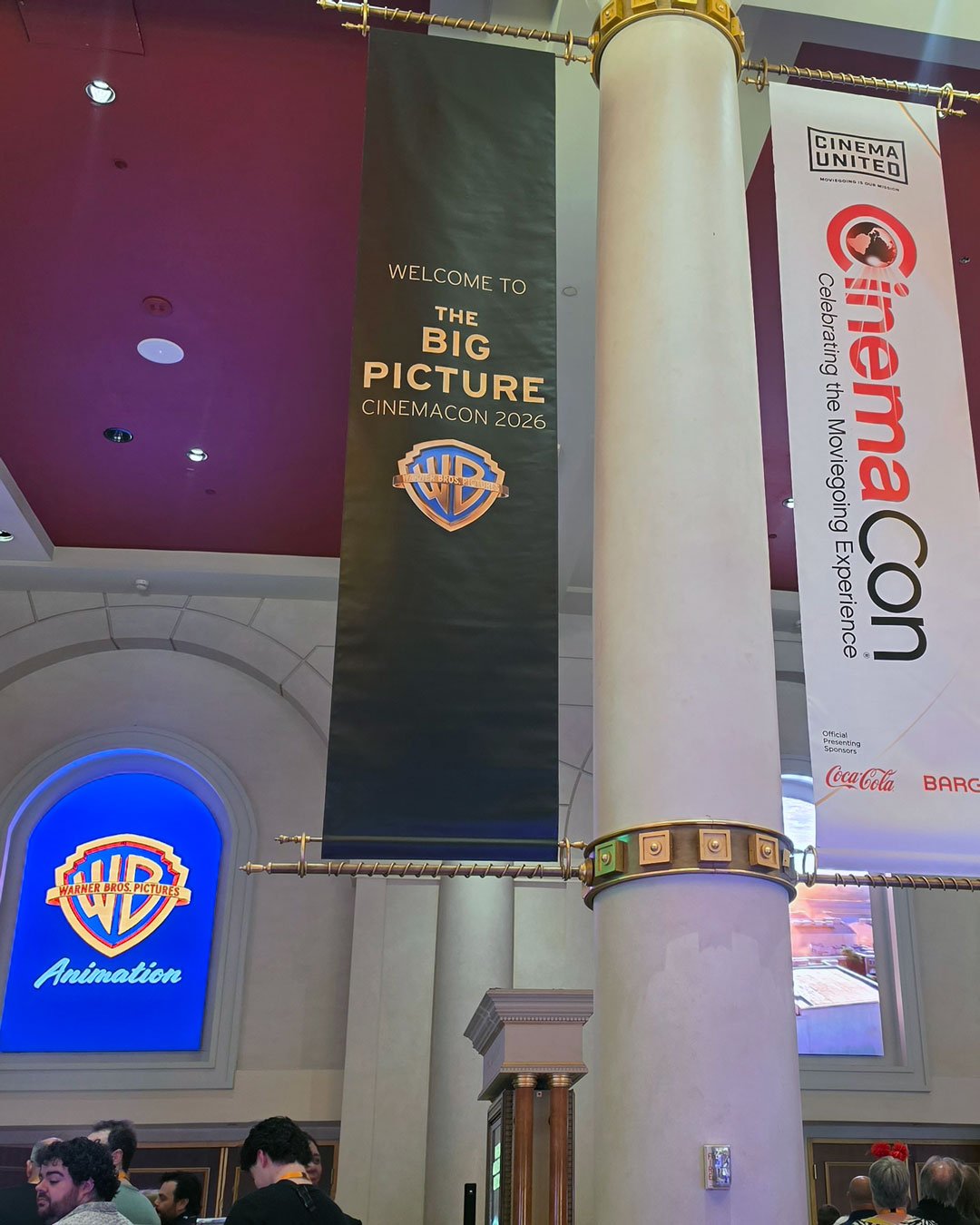
Warner Bros. used its CinemaCon presentation to make one loud point. The studio does not want to win with one movie. It wants to win with range. The presentation jumped from Tom Cruise and Alejandro G. Iñárritu’s first collaboration to DC’s expanding big-screen plans, then into horror, animation, and a stacked 2027 pipeline that tried to make Warner Bros. look like the studio swinging hardest across every corner of the theatrical business.
Warner Bros. Framed the Slate as a Recommitment to Scale and Originality

Pam Abdy and Mike De Luca did not sell the room on safety. They sold it on volume, originality, and the belief that audiences still show up when a studio gives them enough reasons to care. They pointed to Warner Bros. growing from 11 releases in 2025 to 14 in 2026, with 18 planned for 2027, while also arguing that originality is not the risky move, sameness is.
That is the lens that makes the rest of the presentation make sense. Warner Bros. was not just showing trailers. It was trying to prove that the studio can balance event movies, franchise reinvention, and original filmmaker-driven swings without collapsing into one-note brand management. That broader confidence carried the whole show.
Tom Cruise and Alejandro G. Iñárritu Gave the Warner Bros. Presentation Its Biggest Jolt

Tom Cruise and Alejandro G. Iñárritu gave the presentation its biggest “you need to see this in a theater” jolt. Iñárritu stressed that the project was shot on film, in large format, and built specifically for theaters. Cruise framed the collaboration itself as the kind of opportunity that still defines why he makes movies at all.
“I want to tell you that these film, we shot it actually in film in a big format, in this division, especially only to be seen in theaters.”
- Alejandro G. Iñárritu
That statement did more than hype the format. It positioned the movie as a direct defense of theatrical scale, which also fits the way Cruise continues to sell every project he touches. Warner Bros. clearly wanted the pairing itself to feel historic. It is Tom Cruise with one of modern cinema’s most distinct directors, and the presentation treated that combination like a major statement of intent.
RELATED: The Neon CinemaCon Presentation Unleashes Adam Scott Horror, Boots Riley Chaos, and a Wild New Slate
“This is this kind of movie is why I want to make movies.”
- Tom Cruise
Cruise sharpened the entire reveal. Warner Bros. was not just selling a major star pairing. It was selling a movie that both men were presenting as a pure theatrical event, something ambitious, personal, and too big to be reduced to a platform play.
DC Shifted From Superman Momentum to Stranger Corners of Its New Universe
DC Studios used the Warner Bros. stage to build beyond Superman.Peter Safran used Clayface to show DC’s genre flexibility, then brought out Milly Alcock, Jason Momoa, and Craig Gillespie to position Supergirl as a cosmic swing with real emotional and physical scale. Alcock described the role as transformative, while Momoa made it clear that Lobo is not just another job for him.
“I think this journey has been incredibly transformative for me, not only personally but professionally, and I think that I’ve learnt so much from playing Kara, and I’m so excited for everybody to meet her.”
- Milly Alcock
“This is dream come true.”
- Jason Momoa
Those two reactions did a lot of work for the presentation. Alcock sold Kara as a character worth investing in, not just a franchise placeholder, while Momoa’s enthusiasm gave Lobo instant event energy. Together, they made Supergirl feel less like a side branch and more like one of the most personality-driven films in DC’s current pipeline.
RELATED: Godzilla Minus Zero Sequel Roars Into CinemaCon as GKIDS Champions the Power of Theaters
The bigger takeaway was that DC wants to look flexible again. Clayface sounds like a horror play. Supergirl sounds like a large-scale space adventure. The montage also teased Man of Tomorrow for 2027, which suggests Warner Bros. wants the DC pipeline to feel wide open instead of boxed in by one template.
Horror, Animation, and 2027 Made the Warner Bros. Slate Feel Almost Aggressively Broad
Warner Bros. also leaned hard into horror. The Mummy got a push. Evil Dead Burn promised another brutal night out. Mortal Kombat II got the crowd-friendly Johnny Cage treatment. The End of Oak Street added another unsettling genre swing. Then the studio swerved into animation with a first trailer for The Cat in the Hat, using pure tonal whiplash to remind the room that WB wants families, genre fans, and franchise loyalists all in the same overall ecosystem.
The 2027 montage helped Warner Bros. make the case that its future slate is not just big, it is wildly varied. That run included A Minecraft Movie 2, Panic Carefully, an Ocean’s origin story, Bad Fairies, Margie Claus, Shiver, Evil Dead Wrath, and a new M. Night Shyamalan project built from an idea he developed with Nicholas Sparks. Shyamalan sold that one as both a return to ghost storytelling and a reminder of how much the theatrical response still means to him.
“I waited a long time to go back to kind of the genre of ghosts… The movie theater experience is everything to me.”
- M. Night Shyamalan
That gives Warner Bros.’ 2027 bench a little more shape. Even in montage form, the studio was not pitching anonymous future product. It was pitching filmmakers with clear points of view, and Shyamalan’s comments made his project sound like a deliberate return to one of the modes audiences most strongly associate with him.

Which Warner Bros. reveal hit you hardest? Are you more excited for the Cruise and Iñárritu film, Supergirl, Clayface, or The Cat in the Hat? Does this feel like the kind of broad slate theaters need right now? Share your thoughts in the comments or @me
KEEP READING: Sony Pictures CinemaCon 2026 Presentation Packs Its Slate With Spider-Man, Bloodborne, and Big-Screen Swings
Leave a Reply